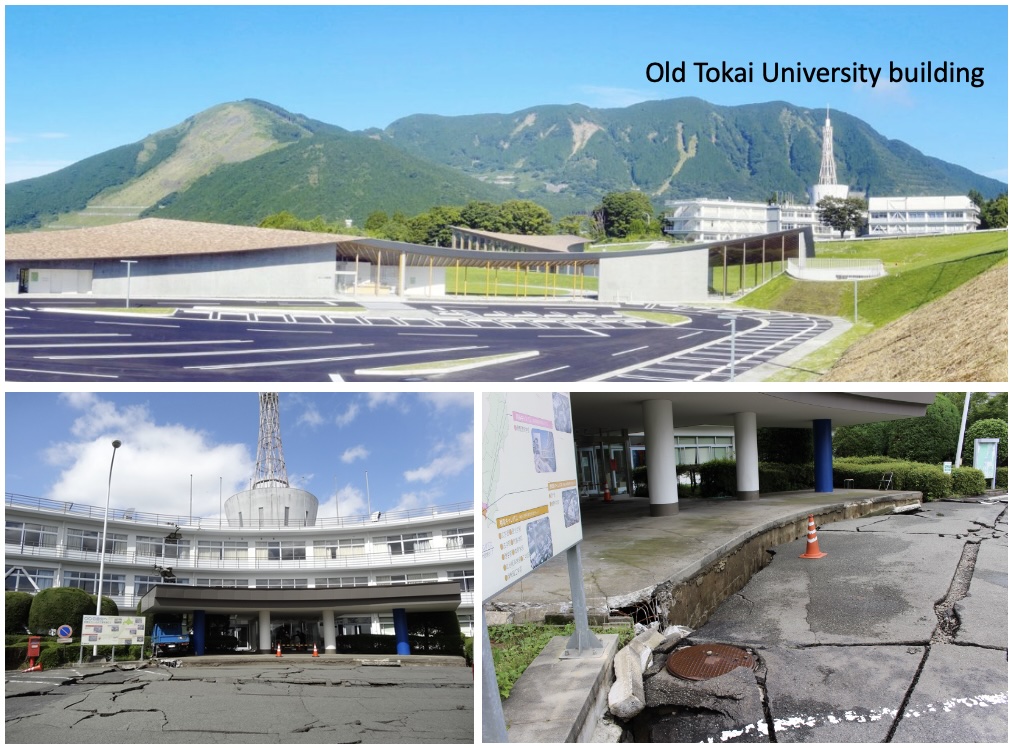
Official excursion and other interesting points
The official EMSEV2026 excursion will take place on the afternoon of August 25th.
Aso Volcano: Mount Aso is the largest active volcano in Japan and one of the largest calderas in the world. Its caldera, about 25 km in diameter, was formed by a series of massive eruptions approximately 90,000 years ago. Inside the caldera, several central cones are still active, including Nakadake, which frequently shows volcanic activity such as gas emissions and small eruptions.
Mount Aso is an important natural laboratory for studying volcanic processes, magma–hydrothermal systems, and volcanic hazards. At the same time, it is known for its spectacular landscapes, grasslands, and unique ecosystems. The excursion to Mount Aso offers participants a valuable opportunity to observe an active volcano and its geological features while enjoying one of Japan’s most impressive volcanic environments.
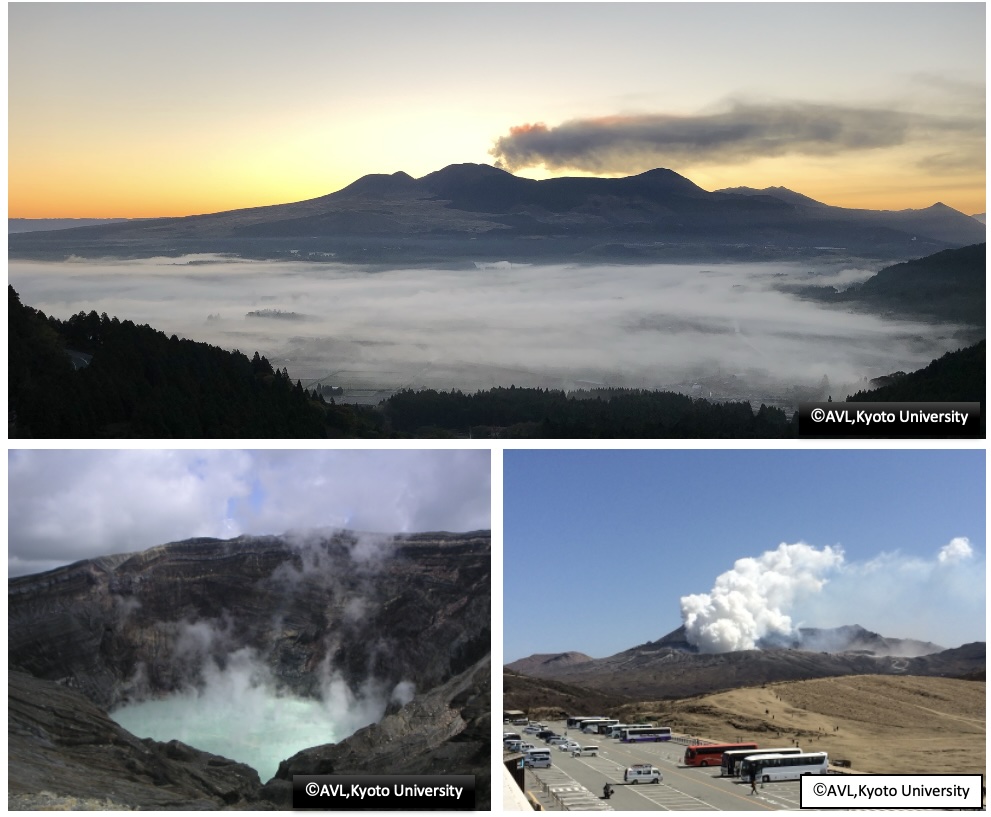
Aso Volcanological Laboratory: at Aso Volcanological Laboratory, Kyoto University, in the central Kyushu region, one of the largest areas of volcanic and geothermal hot spring activity on Earth, as a giant experimental device, and field observations, material science, and theoretical interpretations to promote a comprehensive interpretation of thermal phenomena. Furthermore, by combining these results with similar research results developed on a global scale, we are advancing the analysis of thermal structures and thermal phenomena from the surface crust to the mantle and core, to establish geothermal science as an integrated science.
We had planned to visit the research institute this time, but due to poor road conditions, we decided not to go.
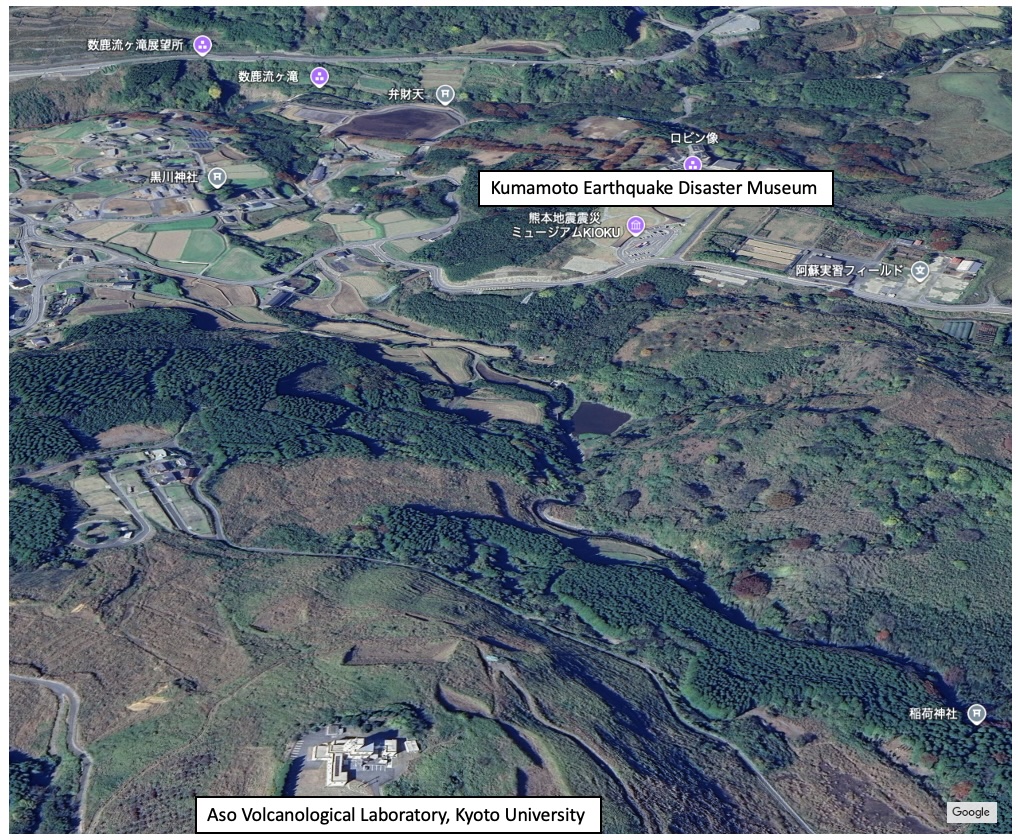
Kumamoto Earthquake Disaster Museum. (KIOKU): The 2016 Kumamoto Earthquake was a series of strong earthquakes that struck Kumamoto Prefecture, Japan, in April 2016. The main shock (Mw 7.0) occurred on April 16, following a major foreshock (Mw 6.2) on April 14. The earthquakes caused severe damage to buildings and infrastructure, including Kumamoto Castle, and resulted in significant human and economic losses. This event highlighted the importance of earthquake preparedness and disaster risk reduction in seismically active regions.
The epicenter of this earthquake was directly beneath the Tokai University Aso campus, which is why the Tokai University campus at the time is now the site of this earthquake museum.